
Introduction: Why SaaS Tools Are The Foundation Of Contemporary Startups

Starting a business in the US is a thrilling opportunity as well as a significant difficulty. The ecosystem is innovative fast paced and fiercely competitive. It is required of founders to work fast verify concepts develop products and expand operations often with little funding.
Efficiency is crucial in this setting.
SaaS software as a Service products are very useful in this situation.
Today’s startups rely on ready to use affordable and highly scalable cloud based solutions rather than creating systems from the ground up or making significant infrastructure investments. SaaS solutions enable teams to work together manage clients automate processes and make data driven decisions all from a single interconnected environment.
SaaS is more than simply a convenience for startups. It’s a tactical benefit.
This thorough guide will teach you:
- What SaaS tools are and how they operate
- Why startups in the USA depend on them
- The most important categories of SaaS tools
- Top tools in each category
- Practical applications
- Advantages and disadvantages
- Typical errors to prevent
- Sophisticated scaling
This tutorial will assist you in creating a robust SaaS stack that is suited for expansion whether you’re starting your own business or refining an already existing one.
A Comprehensive Overview Of SaaS

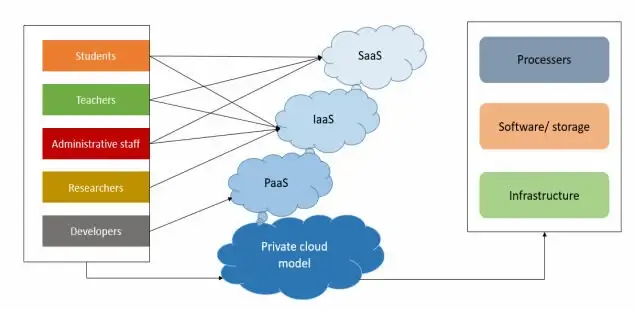
Software as a Service or SaaS is a software delivery model in which cloud hosted applications are accessed via the internet.
SaaS tools in contrast to conventional software that needs to be installed are:
- Instantly accessible
- Continuously updated
- Managed by providers
How SaaS Operates In Real Life
When utilizing a SaaS tool:
- You create an account online
- Log in through a browser or app
- Use the software immediately
- If applicable pay a subscription charge
The provider handles:
- Servers and infrastructure
- Security and backups
- Improvements and updates
By doing this technological complexity is removed freeing up startups to concentrate on what really counts: Growing their company.
Why SaaS Tools Are Crucial For New Businesses
1. Speed of Execution
Startups must act quickly. Teams can set up operations in minutes rather than weeks thanks to SaaS solutions.
2. Cost Effectiveness
It is costly to create specialized systems or hire big teams. SaaS solutions lower operating and development expenses.
3. Global Accessibility
SaaS is perfect for distributed startups since teams may work remotely from any location in the world.
4. Scalability
SaaS tools expand together with your startup. Plans can be upgraded without requiring system reconstruction.
5. Ecosystem Of Integration
The majority of SaaS technologies create a linked workflow across departments through seamless integration.
SaaS’s Place In The US Startup Ecosystem
The US startup environment is defined by:
- Quick invention
- High competition
- High expectations from investors
In order to endure and prosper startups need to:
- Launch quickly
- Optimize resources
- Provide outstanding user experiences
All of this is made possible by SaaS technologies which offer pre built solutions that reduce operational friction.
Essential SaaS Tool Types For All Startups
1. Project Management Tools
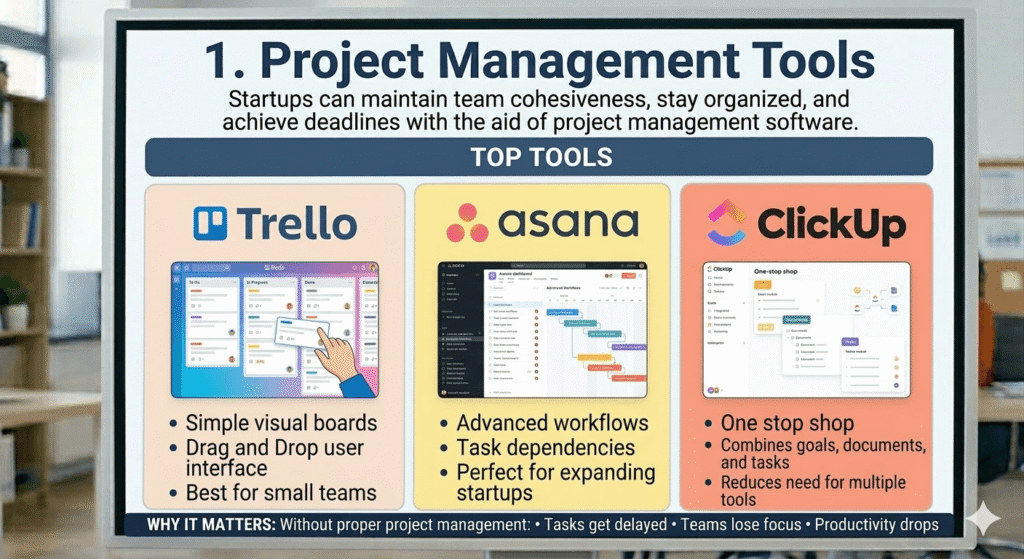
Startups can maintain team cohesiveness stay organized and achieve deadlines with the aid of project management software.
Top Tools
Trello
- Simple visual boards
- Drag and Drop user interface
- Best for small teams
Asana
- Advanced workflows
- Task dependencies
- Perfect for expanding startups
ClickUp
- One stop shop
- Combines goals documents and tasks
- Reduces need for multiple tools
Why It Matters
Without proper project management:
- Tasks get delayed
- Teams lose focus
- Productivity drops
2. Tools For Communication
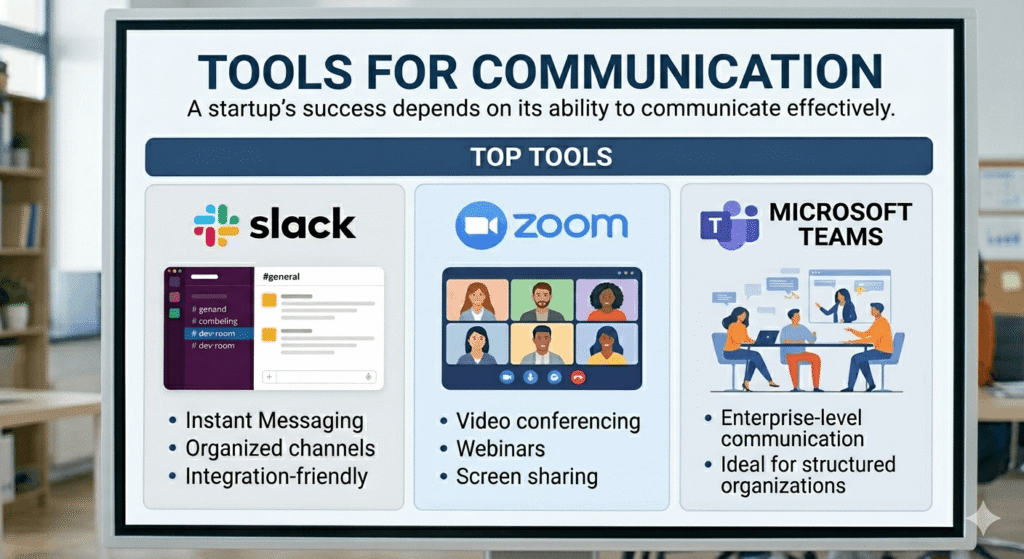
A startup’s success depends on its ability to communicate effectively.
Top Tools
Slack
- Instant Messaging
- Organized channels
- Integration-friendly
Zoom
- Video conferencing
- Webinars
- Screen sharing
Microsoft Teams
- Enterprise-level communication
- Ideal for structured organizations
3. SaaS Tool Marketing
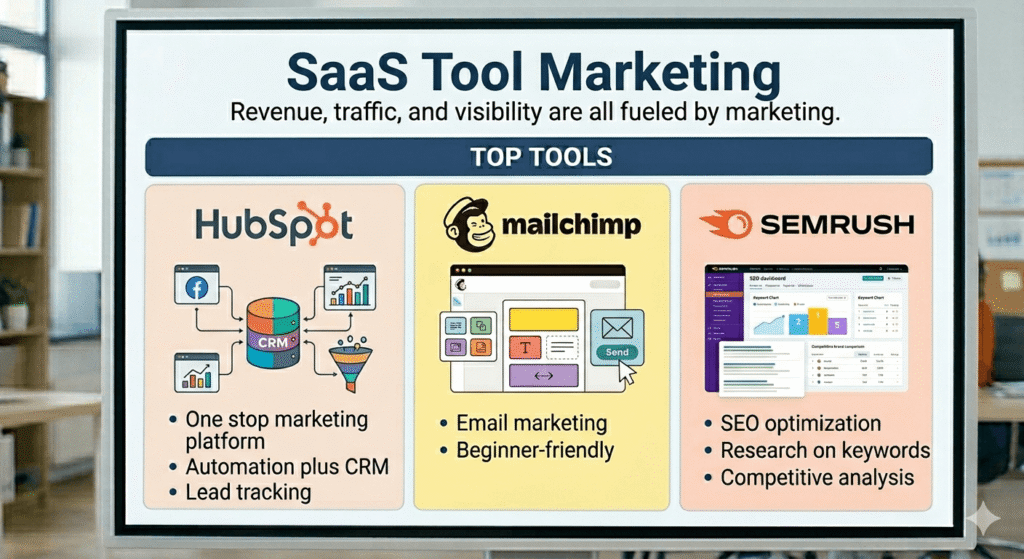
Revenue traffic and visibility are all fueled by marketing.
Top Tools
HubSpot
- One stop marketing platform
- Automation plus CRM
- Lead tracking
Mailchimp
- Email marketing
- Beginner-friendly
SEMrush
- SEO optimization
- Research on keywords
- Competitive analysis
4. CRM and Sales Tools
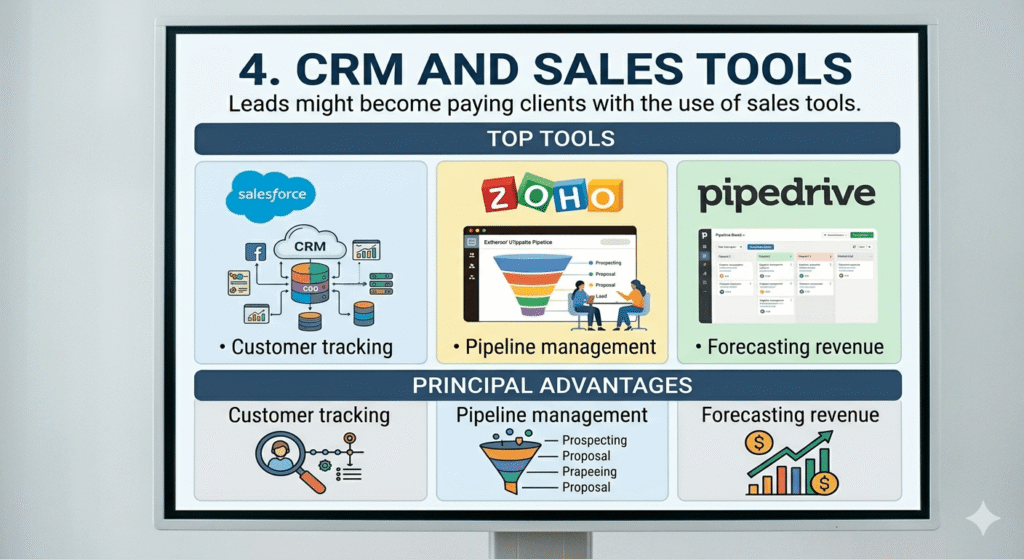
Leads might become paying clients with the use of sales tools.
Top Tools
- Salesforce
- CRM Zoho
- Pipedrive
Principal Advantages
- Customer tracking
- Pipeline management
- Forecasting revenue
5. Accounting And Finance Tools
For survival money management is essential.
Top Tools
- QuickBooks
- Wave (free option)
- FreshBooks
Key Features
- Monitoring expenses
- Invoicing
- Reporting on finances
6. Customer Support Tools

Customer experience has a direct impact on growth and retention.
Top Tools
- Zendesk
- Intercom
- Tidio
7. Design & Development Tools
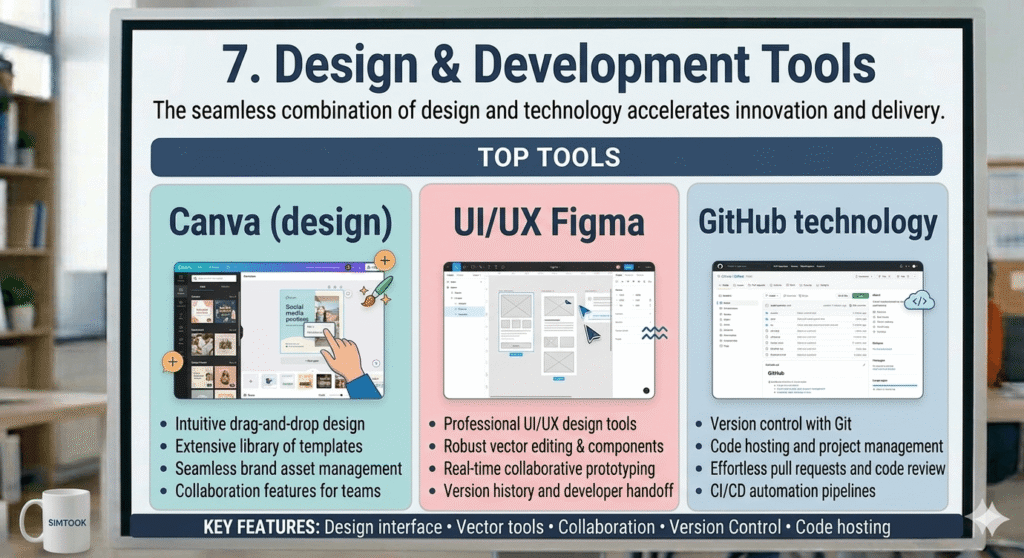
Top Tools
- Canva (design)
- UI/US figma
- Github technology
8. Tools For Automation And Productivity
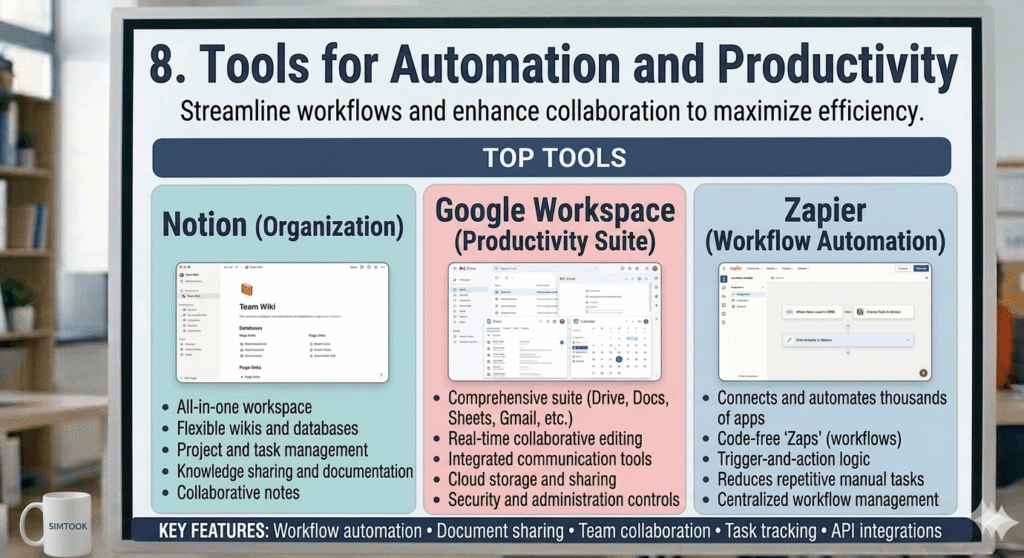
Top Tools
- Notion
- Google Workspace
- Zapier
Automation Example
A new lead is recorded added to CRM emailed and a slack notice is set off.
This minimizes manual labor and saves time.
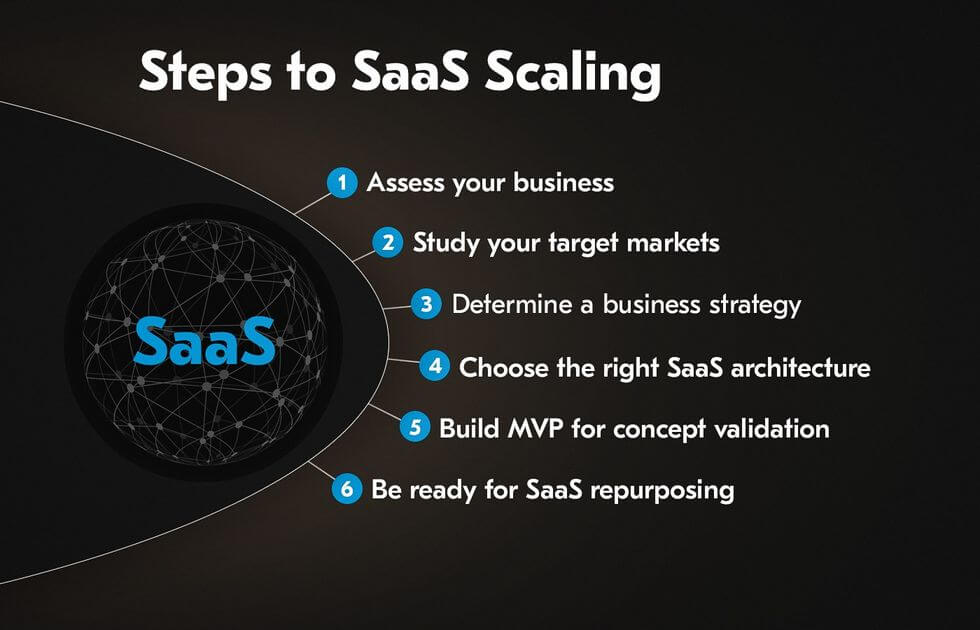
How To Construct The Ideal SaaS Stack
Utilizing the correct tools is more important when building a SaaS stack than utilizing more.
Step 1: Outline Your Essentials.
Finish Your Big Tasks Complete.
Step 2: Begin To Lean
Steer clear of early tool overload.
Step 3: Look Before Buying
Use free plans to evaluate tools.
Step 4: Strategically Scale
Only upgrade when it’s really essential.
Example of a Smart SaaS Stack
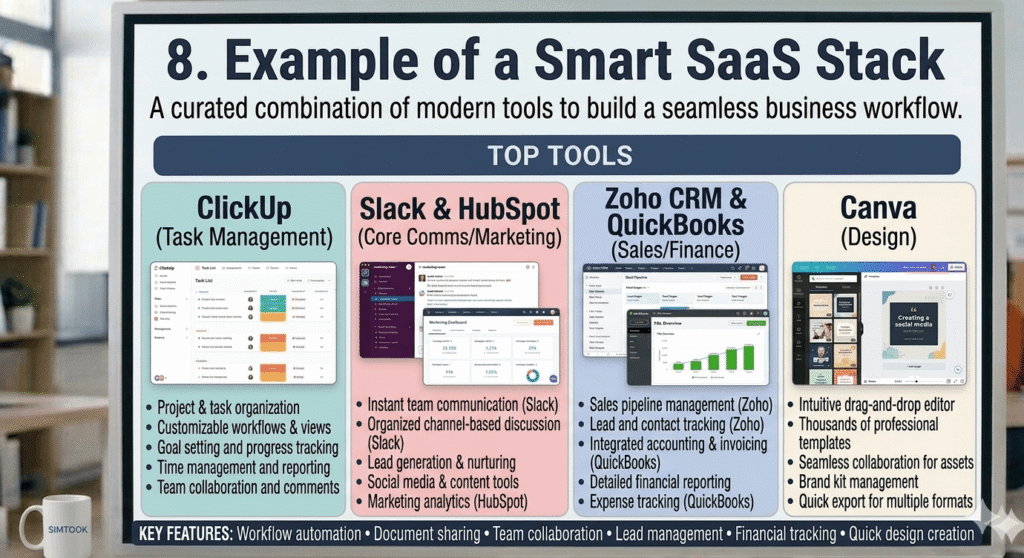
- ClickUp → Task management
- Slack → Communication
- HubSpot → Marketing
- CRM Zoho → Sales
- QuickBooks → Finance
- Canva → Design
Benefits And Drawbacks Of SaaS Tools
Advantages
1. Low Upfront Cost
No need for heavy investment.
2. Usability
Interfaces that are easy to use.
3. Flexibility
Access from anywhere.
4. Automatic Updates
No manual maintenance.
5. Scalability
Upgrade whenever you want.
Disadvantages
1. Recurring Expenses
Over time subscriptions may accumulate.
2. Internet Dependency
Needs reliable connectivity.
3. Data Privacy Issues
External storage is used to store data.
4. Restricted Personalization
Less adaptability than software that is specially designed.
5. Over-Reliance
Dependency problems might arise from using too many tools.
Typical SaaS Errors Startups Make
1. Using Too Many Tools
Causes inefficiency and confusion.
2. Ignoring Integrations
Disconnected tools reduce productivity.
3. Lack of Training
Teams don’t use tools efficiently.
4. Reliance On Trends Rather Than Needs
When making judgments always keep your company’s needs in mind.
Advanced SaaS Growth Strategies
1. Automation First Method
Use Zapier and other similar technologies to automate and streamline monotonous processes.
2. Making Judgments Based On Data Driven Insights
Observe performance metrics and continue to improve your strategies.
3. Ecosystem Of Integration
Make sure every tool functions flawlessly.
4. Minimal Stack Strategy
Instead of concentrating on numerous dispersed instruments concentrate on a smaller number of more potent ones.
SaaS’s Future In The United States
Startups need to remain ahead of the continuously changing SaaS market.
Important Trends
- AI driven SaaS systems
- Low code and no code solutions
- Remote-first collaboration
- Customized user experiences
Early adoption of these trends can provide startups a substantial competitive advantage.
Common Questions
To put is simply what is SaaS?
It is software you use online without installing it.
Are SaaS tools suitable for small startups?
Yes, they are ideal due to low cost and scalability.
Can I run a startup using only free tools?
Yes initially, but scaling requires paid tools.
How many SaaS tools should I use?
Start with 3–5 essential tools.
Are SaaS tools secure?
Most are secure, but always choose trusted providers.
What is the biggest benefit of SaaS?
Speed and efficiency.
Do SaaS tools integrate with each other?
Yes, most modern tools support integrations.
Is SaaS better than traditional software?
For startups, yes — due to flexibility and cost savings.
Conclusion: Developing AN Intelligent SaaS Approach
In the US SaaS tools have fundamentally changed how startups function. They enable entrepreneurs to create launch and grow companies more quickly than in the past.
However, success doesn’t come from using every tool available.
It comes from:
- Selecting the appropriate instruments
- Using them effectively
- Building a connected system
- Scaling strategically
A well-optimized SaaS stack can:
- Save time
- Reduce costs
- Boost output
- Accelerate growth
SaaS is more than simply a set of tools in today’s startup ecosystem it is the foundation of contemporary corporate success.